
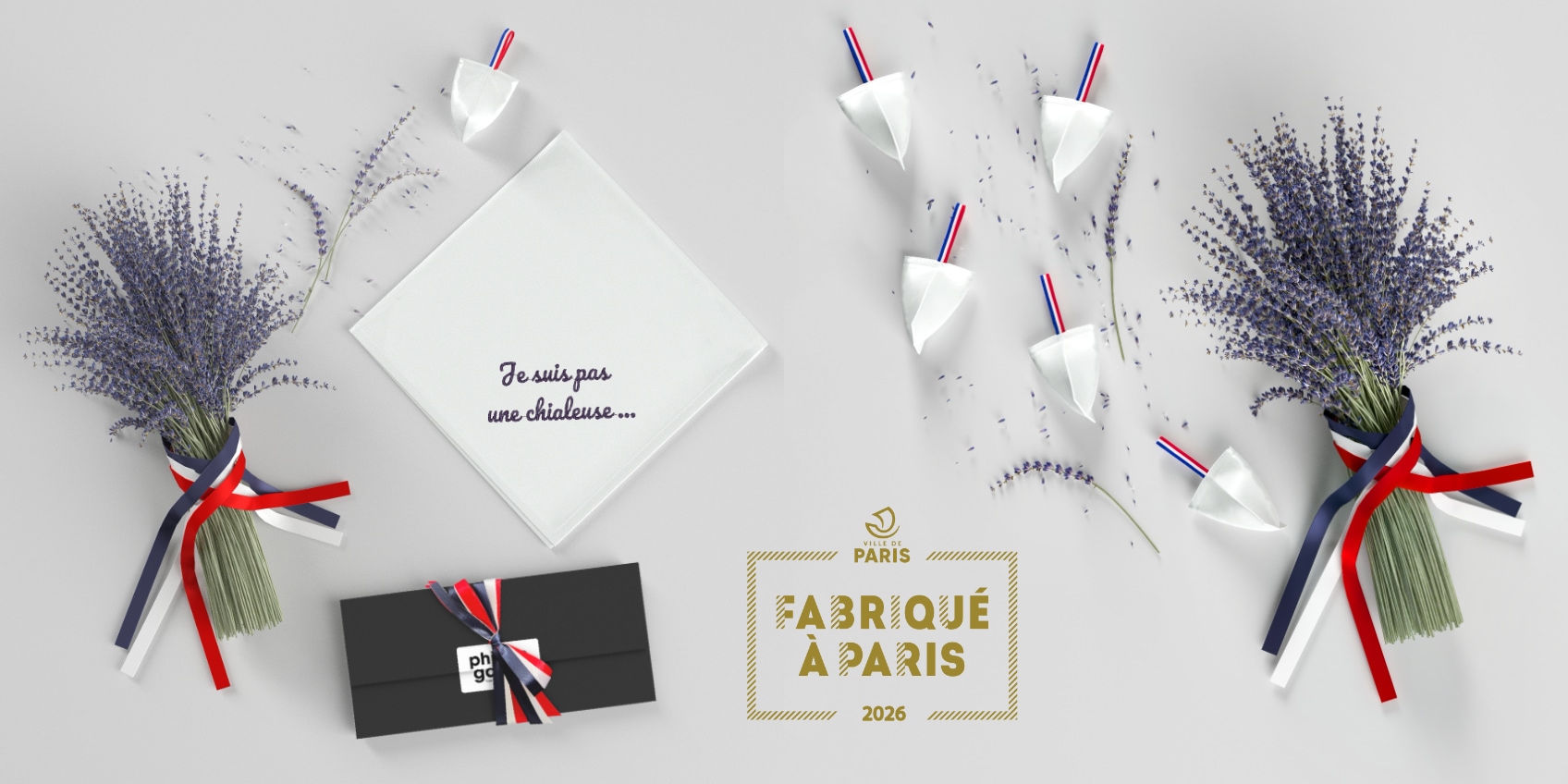
Comment laver et entretenir vos mouchoirs en tissu ?
Since 2009, I have been making and personalising your French handkerchiefs in my Paris workshop. Here are my tips for **washing, removing stains, drying and ironing your organic cotton twill handkerchiefs, while caring for both the fabric and the embroidery.
A few simple steps help preserve their softness and shape. I also share my tips for making ironing easier, particularly when your handkerchiefs have already dried.
Washing your organic cotton twill handkerchiefs
Wash your handkerchiefs at 30–40°C, with similar colours and a mild detergent containing no optical brighteners or bleaching agents
The 100% ENKA viscose embroidery thread I use is chosen for its silky finish and colourfastness. Its durability does not, however, replace the care instructions for the complete handkerchief: both the cotton and the embroidery need to be protected.
When washing by hand, use plenty of water and rinse thoroughly. After washing, do not leave your embroidered handkerchiefs in a damp pile: hang them up to dry straight away.
Natural cotton shrinkage can reach 5% when the recommended care instructions are followed.** Excessive heat, particularly during tumble drying, can increase shrinkage.
Marseille soap for your handkerchiefs
If you like using Marseille soap for your laundry, choose a preparation suitable for machine washing and follow the recommended dosage. Check that it contains no bleaching agents or optical brighteners, even if it is intended for white laundry.
For spot treatment, you can also use a soap suitable for the fabric, after testing it on a small, inconspicuous area. Avoid rubbing the embroidery directly.
Removing stains without damaging the embroidery
For grease stains, apply terre de Sommières clay to the dry fabric as soon as possible. Leave it to work for several hours, or overnight, then gently remove the powder before washing your handkerchief. Follow the precautions indicated on the product.
Some of my customers have also shared positive feedback about Les Petits Bidons stain-removing soap bars. Whatever stain remover you choose, check that it is suitable for both cotton and viscose embroidery, then test it on a small, inconspicuous area.
Do not use bleaching products on your embroidered handkerchiefs, including sodium percarbonate. White fabric may have coloured embroidery: the product must be suitable for both.
Fabric softener: white vinegar in the rinse
To soften laundry, I prefer white vinegar in the rinse to a conventional fabric softener.
If your washing machine’s instructions allow it, add it to the fabric softener compartment. Follow the product’s precautions and recommended dosage: highly concentrated cleaning vinegar should not be used in the same way as a less concentrated white vinegar.
Add it during the rinse, separately from the detergent. Never mix vinegar with chlorine bleach.
There is no need to add household cleaning alcohol, starch or fragrance. If you wish to starch your handkerchiefs, do so separately, following the instructions for the product you use.
Drying your fabric handkerchiefs
The best way to dry your handkerchiefs is to air-dry them, laid flat or hung up. Gently reshape them without pulling on the fabric or the rolled hems.
I do not recommend tumble drying. High temperatures and prolonged drying can increase cotton shrinkage and set creases that are difficult to remove.
If you do use a tumble dryer, choose the lowest temperature and a short programme. Remove your handkerchiefs while they are still slightly damp: this prevents overdrying and makes ironing easier.
Ironing your organic handkerchiefs
Ironing a handkerchief while it is still slightly damp
To make ironing easier, I recommend ironing your handkerchiefs **while they are still slightly damp, on the reverse side
Start at a corner away from the embroidery, then gradually work towards it. Avoid flattening the stitches with the iron; a clean, damp pressing cloth helps protect the embroidery.
Ironing is also an opportunity to straighten your handkerchief: gently restore its square shape without pulling on the edges.
My tip when your handkerchiefs have already dried
Lightly dampen the fabric with a water spray, without soaking the embroidery. Place your clean handkerchief in a clean, airtight bag and leave it for about half an hour, then iron it straight away.
This resting time allows the moisture to spread through the fabric, making ironing easier. It is a technique I use myself in the workshop.
Avoid piling up wet handkerchiefs or leaving them sealed in the bag for a long time, particularly before their first wash.
If you are short of time, lightly spray the fabric with water and leave it for a few minutes before ironing. Do not add vinegar or homemade mixtures to the iron’s water tank: follow the instructions in its manual.
Starching your handkerchiefs
To give your handkerchiefs more structure, you can use a laundry starch, either ready to use or in crystal form, such as Rémy rice starch.
Follow the dosage and instructions on the packaging. For a starched finish, Rémy recommends ironing the fabric while it is still slightly damp. Adjust the amount of starch to achieve your preferred finish, without overloading the fabric or embroidery.
Storing your handkerchiefs after ironing
Wait until your handkerchiefs are **completely dry and cool** before folding them and placing them in their Philippe Gaber recycled cardboard box.
If you enjoy its fragrance, you can place a small lavender sachet in the drawer, next to the box.
Explore the organic handkerchiefs made in Paris by Philippe Gaber and discover the personalized handkerchiefs embroidered in Paris.